03/06/26 9:31 am
Recently, I’ve become obsessed with satiety — how full I feel based on the foods I eat. (And yes, I promise this is actually a serious entry in my ongoing newsletter/blog about tips for life and business. Stay with me.)
As you may know (since I never shut up about it), I went on a weight-loss journey over the past 15 or so months, shedding 65 pounds along the way. I’m now in the metabolic reversal phase, which basically means that after spending more than a year eating fewer calories than my body burns in a day (my basal metabolic rate), I’m slowly adding calories back into my diet as I rebuild my metabolism.
Blah blah blah. The point is, every week or two, my trainer and I agree on adding more calories back into my daily calorie goal, and I can eat a bit more. It’s fun!
There’s a temporary challenge, though: As I eat more calories, various hormones in my body that respond to hunger and food get REALLY excited, and they’re like: “YES! MORE CALORIES! LET’S EAT EVEN MOOOOOORE!”
The point is, as I’ve increased the number of calories I can eat per day… I’ve gotten a bit hungrier, too. Hence what I said at the outset: I’ve been really, really focused on satiety.
I’m not an expert, but I’ve learned a lot. Certain foods — potatoes, apples, yogurt are better at making you feel full for various scientific reasons. And there’s also a brain trick involved: Foods that take longer to eat (and chew!) make us feel fuller psychologically.
For years — years! — I’ve had a protein smoothie every morning. The ingredients have evolved over time, but now it includes protein powder, almond milk, superfood greens powder, and frozen strawberries. It’s delicious, and packs a lot of protein. But as I’ve worked through this metabolic reversal phase, I kept finding that an hour or two after downing my smoothie, I was hungry. Really hungry. Not good. I don’t want to start snacking or eating lunch at 10:30.
So recently, I’ve been experimenting with… glop.
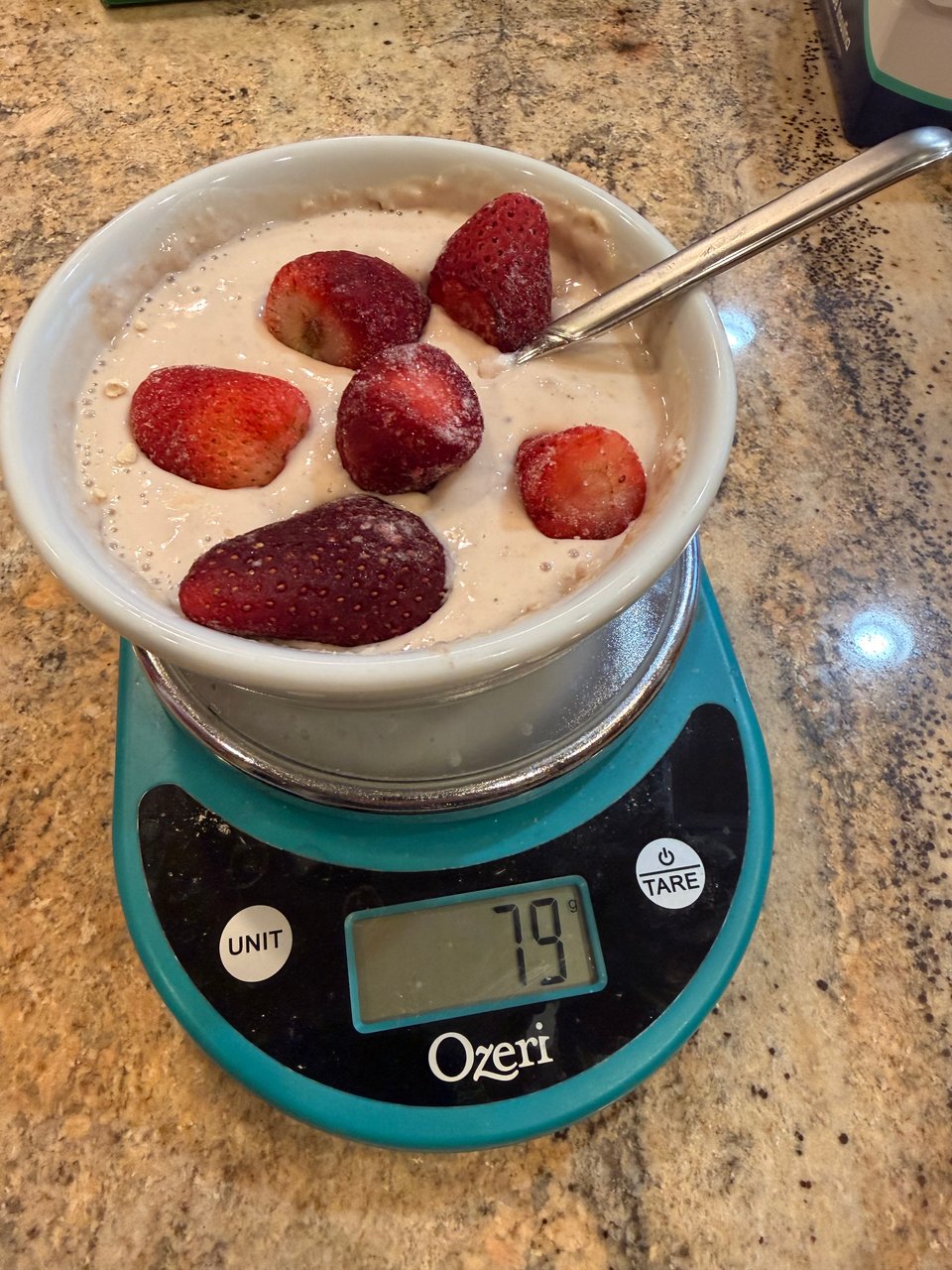
The ingredients are the same. But instead of putting everything into my blender, I add in psyllium husk — a fiber supplement that absorbs liquids — pop the frozen strawberries on top, and let the whole bizarre looking bowl sit in the fridge for an hour or two.
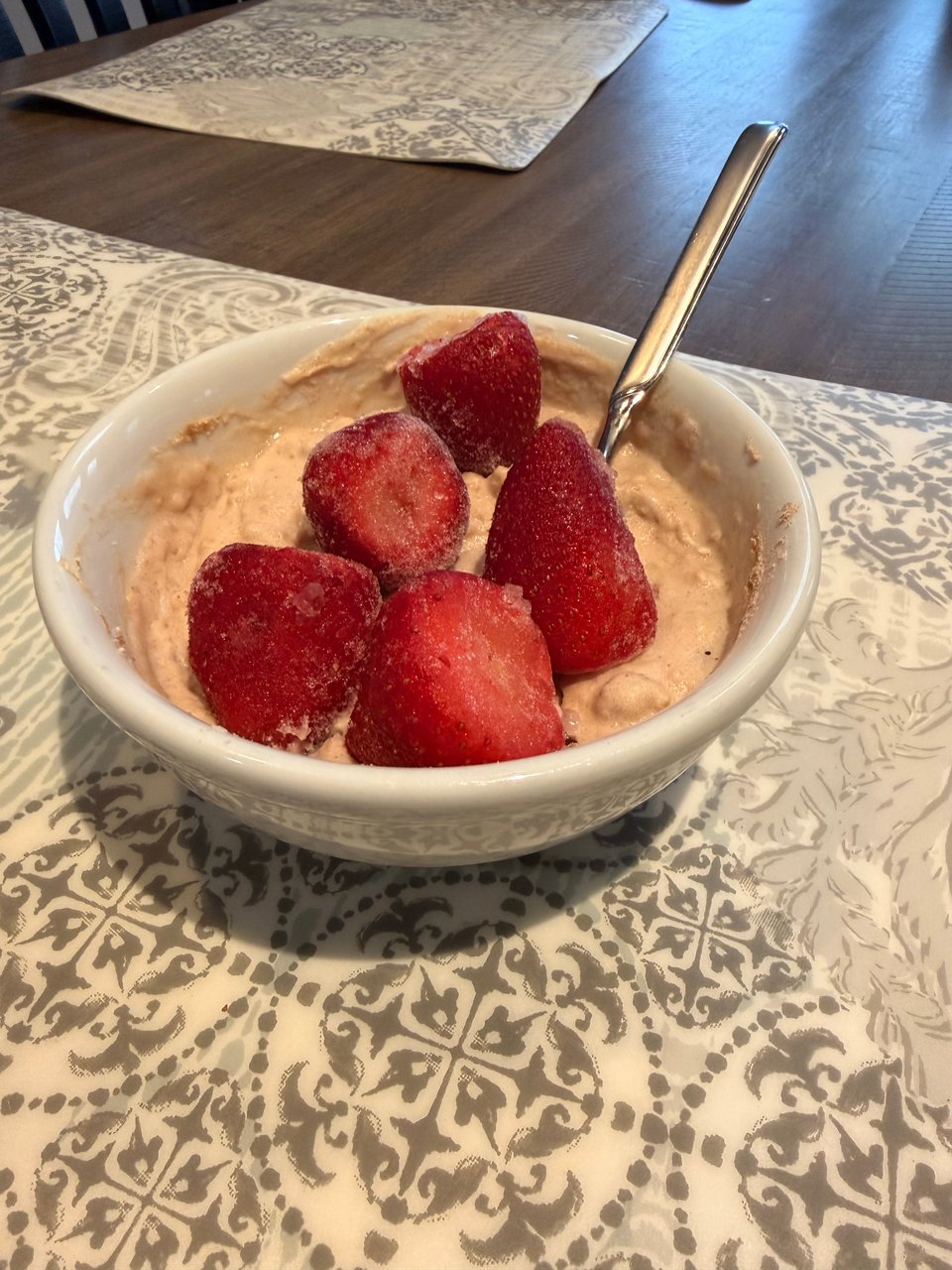
The husk really thickens things, and I come back to a bowl of, well, glop. It’s a little like soft serve. It is not especially visually appealing. But it’s delicious.
It’s exactly the same ingredients as my smoothie, and the same macros. But it’s gone from a liquid I drink in a few seconds to a hearty bowl I scoop up with a spoon. It takes longer to eat. It makes me feel fuller. Even though I know I’m using a psychological trick on myself, it works: My brain gets the signals of eating slower, not guzzling down a drink, and tells me I’m more full (aka less hungry) for longer.
So why am I laying it on glop-level thick? Because I genuinely think there’s a life lesson here that applies to other scenarios, too.
All of us have work that can feel like a chore. I’m an independent consultant and choose my own clients and decide exactly what work I do, but sometimes I have a call I’m not looking forward to, or a document to write up that I’m inclined to procrastinate on doing, because I just don’t want to. We all have the work we’d rather avoid.
You’ve likely heard the advice that when you’re feeling that sort of desire to delay, you should try to focus on just getting the thing done, especially if it’s a quick task. If you can get it done in five minutes or fewer, just do it, instead of spending hours, or days, or longer avoiding it. The feeling of accomplishment and removal of the stress hanging over you is powerful.
I think that’s great advice. I follow it.
But I also think it’s important to heed The Lesson of Glop™: Empower yourself to feel full from the work you’re doing and the choices you’re making. “I don’t want to do this thing, but it’s going to help this client or my coworker or my family.” Maybe spending time on the thing you don’t want to do will help you learn a new thing; maybe it’ll just suck.
But you’re doing it for a reason. Whether it’s simply because your boss told you to do it, or because getting the thing done will improve another person’s life in some way — whether they’re a client, a colleague, or a family member. You can and should feel the personal satisfaction of getting it done. And you should take time to let that feeling fill you up. Acknowledge it, appreciate it, and remember it the next time you have a less-than-desirable task to tackle.
We rarely take the time to appreciate how great it feels to breathe unencumbered through our noses. We do feel that gratitude in the first moment when a stuffy-nose head cold finally lifts. Remembering to acknowledge that gratitude when the stuffiness is less fresh in your mind is a great skill. Take a moment right now, in fact, to experience and appreciate the joy of easy breathing. (If you are dealing with congestion or another breathing issue right now, I’m sorry, though I hope you get my point regardless.)
My glop looks gross. It’s a little slower to make than a smoothie. And I make a smoothie in real time and drink it seconds later. Glop I make the night before, or at least an hour before I intend to eat it. (The husk needs time to do its thing; the frozen fruit needs some time to thaw.)
I invest that time and delayed gratification because fullness matters to me. It helps ensure that I don’t make bad snacking decisions or eat meals way too early and run out of calories, leaving me famished hours before bedtime.
Finding fullness from the work you do makes your job more rewarding, which makes you better at your job. Don’t just do the work; relish in the win of doing it well. Higher satisfaction at work comes from feeling like you’re doing a great job. And a happier you leads to happier results everywhere. Glop it up.